Can You Build a SaaS Without Being a Developer? What You Really Need to Know in 2026
A practical guide for nontechnical founders evaluating AI, no-code, low-code, and developer-assisted approaches to building and operating a SaaS.
Can You Build a SaaS Without Being a Developer? What You Really Need to Know in 2026
You have a SaaS idea. You can describe the product, sketch the screens, and use AI tools that promise to handle much of the implementation.
So can you build a SaaS if you are not a professional developer?
Yes—but building a working application is easier than taking responsibility for a reliable product.
AI coding tools, AI app builders, no-code platforms, and low-code tools can reduce implementation work. They cannot decide what should be built, determine whether the result is safe, protect customer data, manage operating costs, or respond when a dependency fails. A founder can learn those responsibilities without becoming a full-time software engineer, but cannot remove them.
Short Answer
A nontechnical founder can build a focused SaaS MVP with AI, no-code, low-code, developer assistance, or a combination of approaches. An MVP is not the same as a production SaaS, however. Even a narrow launch needs requirements, testing, permissions, security, deployment, monitoring, and a plan for maintenance.
The amount of technical knowledge required depends on the product’s complexity and risk. A private internal tool and a payment-enabled product handling sensitive customer data do not have the same obligations.
A SaaS Is More Than an Interface
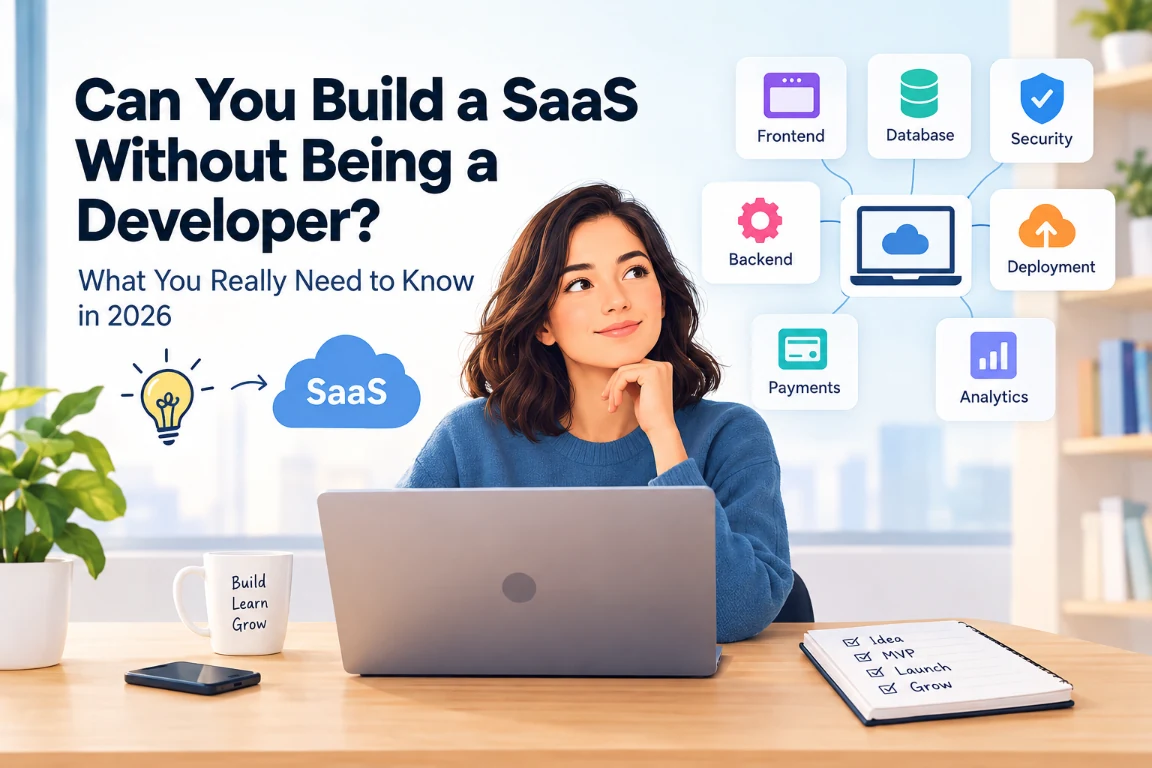
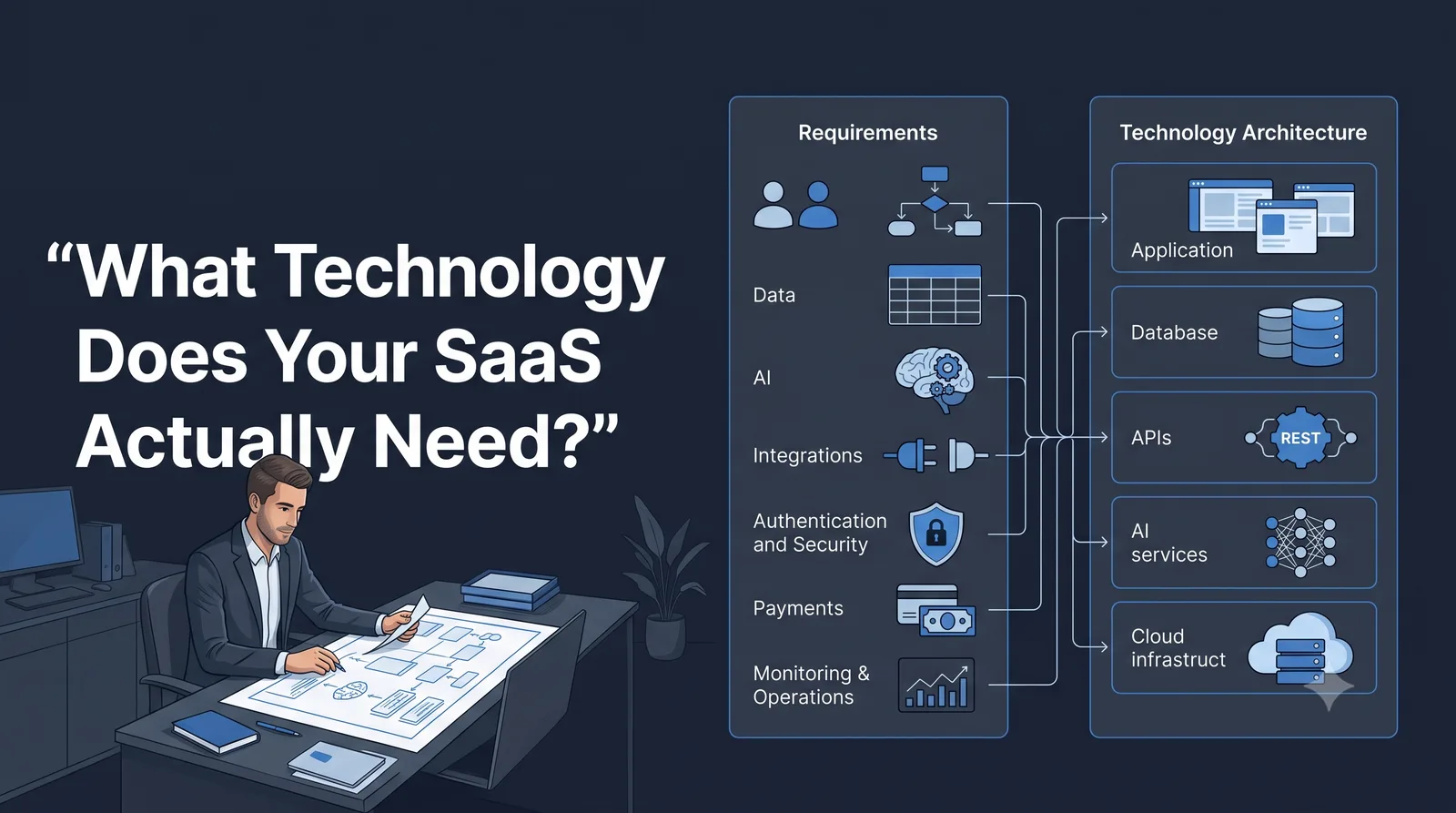
An interface is only the visible part of a SaaS. A typical product may also require:
- frontend screens and application logic
- a database and data-access rules
- authentication, authorization, and permissions
- APIs and third-party integrations
- payments, subscriptions, email, and notifications
- file storage, backups, and recovery
- testing, deployment, logging, monitoring, and analytics
You may not need every capability on the first day. A useful MVP can be small. But asking “Can I make an app?” is less useful than asking:
Can I assemble and operate the system this product requires?
That question exposes the decisions that a generated interface can hide.
An MVP Is Not a Careless Product
An MVP is about scope. Its purpose is to test whether a core product hypothesis creates enough value for real users.
An AI-powered document-analysis MVP might need registration, file upload, processing, results, basic billing, and basic monitoring. It probably does not need twenty integrations or a complex microservices architecture on day one.
The features that do launch still need to work correctly. A narrow product can be technically responsible. “Small” should not mean “untested.”
Where AI Can Help
Depending on the tool and workflow, AI can help with:
- user interfaces and application code
- database schemas and API endpoints
- service integrations
- test cases and documentation
- code explanation and debugging
- refactoring and deployment configuration
For a nontechnical founder, explanation can be as valuable as generation. An unfamiliar function can be explained, an error can be investigated, and a frontend-to-backend interaction can be made easier to understand.
The important distinction is between receiving an answer and knowing whether that answer is correct. The second requires evidence from the code, tests, documentation, and observed behavior.
For a broader evaluation of AI coding tools, see the AI coding tools decision guide.
What AI Does Not Remove
Suppose an AI tool generates a login flow. A normal login may work while important cases remain broken:
- a user accesses another user’s data
- a session expires unexpectedly
- repeated failed credentials are not handled safely
- an API request fails halfway through an operation
- a secret is exposed in client code or logs
- a payment or database dependency becomes unavailable
These are system questions as much as coding questions. You do not need to implement every security mechanism personally, but you do need to understand the expected behavior and how to verify it.
You do not have to build every component yourself, but you need enough technical understanding to evaluate the components you depend on.
The Biggest Risk: False Confidence
AI can make development feel deceptively easy. A few prompts may produce a functioning interface, but “it runs” is not evidence that it is ready for real customers.
Consider a product that calls an external model API for every customer operation. With ten users, the experience and cost may look acceptable. At higher usage, API costs, rate limits, latency, retries, and failure handling may change the economics of the product.
Nothing has to be visibly broken for the business model to become unsustainable. Technical decisions should be evaluated against the next stage of product usage, not only the first demo.
Risks to Understand
Product risk
The product solves the wrong problem or includes more scope than the core hypothesis requires. User interviews and a narrow workflow reduce this risk more effectively than adding features.
Security risk
Customer information, credentials, API keys, or administrative functions are not adequately protected. Permissions need to be tested for both allowed and forbidden access.
Reliability risk
The normal path works, but the product fails when a database, API, payment service, or other dependency is unavailable. Error handling and recovery need explicit tests.
Cost risk
The product is inexpensive at small scale but becomes expensive as users, data, or AI usage increase. Model calls, storage, bandwidth, and vendor limits should be measured.
Vendor risk
The product becomes heavily dependent on one model provider, platform, database, or hosting service. Identify which dependencies are replaceable and which are structural.
Maintenance risk
Nobody understands the generated code or architecture well enough to change it safely. Keep the system readable, documented, tested, and reviewable from the first release.
Scaling risk
An architecture that works for early users may need significant changes as data volume, traffic, or operational requirements grow. A focused MVP should still make its assumptions visible.
These risks are not arguments against AI. They are reasons to treat verification as part of development rather than a final step.
What Should a Nontechnical Founder Learn?
You do not need to become an expert in every technical field before starting. Learn enough to reason about the system:
Understand your data
What information does the product store? Where does it live? Who can access it? How is it backed up and deleted?
Understand authentication and permissions
How do users sign in? How are sessions handled? What prevents one customer from seeing another customer’s information?
Understand APIs and dependencies
Which services communicate? What happens when an API changes, times out, or returns an unexpected response?
Understand testing
How do you know a feature works beyond the happy path? What happens when users provide invalid input or repeat an action?
Understand deployment and monitoring
Where does the product run? How does code reach production? How will you know that something went wrong if a customer does not report it?
These are not necessarily tasks you must execute forever. They are capabilities you need in order to make responsible decisions and recognize when deeper expertise is required.
A More Realistic Way to Build
1. Define the problem
Identify who has the problem, what outcome they need, and the smallest useful version of the solution.
2. Identify required capabilities
List the actual needs: frontend, data, authentication, permissions, payments, AI, APIs, files, notifications, and operations. Do not choose technologies simply because they are popular.
3. Choose the development approach
Consider an AI app builder, no-code, low-code, AI coding tools, traditional development, hiring a developer, or a hybrid approach. Complexity, budget, risk, and expected growth should drive the decision.
4. Build a narrow MVP
Use AI where it accelerates implementation, but keep the generated system understandable and the changes reviewable.
5. Test beyond the happy path
Test invalid input, permissions, authentication, integrations, payments, failure recovery, and the important business workflows.
6. Secure and deploy it
Protect customer data, secrets, APIs, and administrative functions. Establish a repeatable deployment process and know how to recover from a failed release.
7. Monitor and improve it
Watch errors, performance, usage, and infrastructure costs. Let real user behavior and operational evidence guide the next change.
For pricing and packaging decisions, see the SaaS pricing guide.
So, Can You Build a SaaS Without Being a Developer?
Yes. But the founder’s role changes.
You may not need to write every line of code. You do need to become capable of:
Defining → Specifying → Evaluating → Testing → Verifying → Operating → Deciding
AI reduces some manual implementation work. It does not eliminate the need to understand the system or make technical decisions.
Decision Checklist
Before launch, confirm:
- The product hypothesis and first workflow are narrow enough to test.
- Stored data, permissions, secrets, and dependencies are understood.
- Generated code and configuration are reviewable.
- Tests cover failure cases as well as the happy path.
- Deployment, rollback, backups, and monitoring are defined.
- AI, hosting, storage, and payment costs are measured.
- A qualified developer or technical advisor can review high-risk areas when needed.
Conclusion
AI has made building software more accessible, but a SaaS is still a systems problem rather than only a coding problem.
You do not have to become a professional developer to build a SaaS. You do need to understand what you are building, what can go wrong, how to verify it, and when to ask for deeper technical help.
AI can help you build the product. You still have to understand the product.
Frequently Asked Questions
Can a nontechnical founder build a SaaS?
Yes. AI, no-code, low-code, and developer-assisted approaches can reduce implementation work. The founder still needs enough technical understanding to define requirements, evaluate the system, test it, protect customer data, control costs, and operate the product.
Is an AI-generated SaaS production-ready?
Not automatically. A working demo does not prove that permissions, error handling, security, dependencies, backups, monitoring, and recovery work correctly. Production readiness requires review and validation.
Should I use no-code, AI, or hire a developer?
Choose based on product complexity, risk, budget, required integrations, expected growth, and your ability to maintain the system. A hybrid approach is often appropriate when the MVP is narrow but customer or operational risk is meaningful.
What should I learn before launching?
Learn how your product stores data, authenticates users, enforces permissions, communicates through APIs, handles failures, runs tests, reaches production, and reports errors and costs.
Related Articles
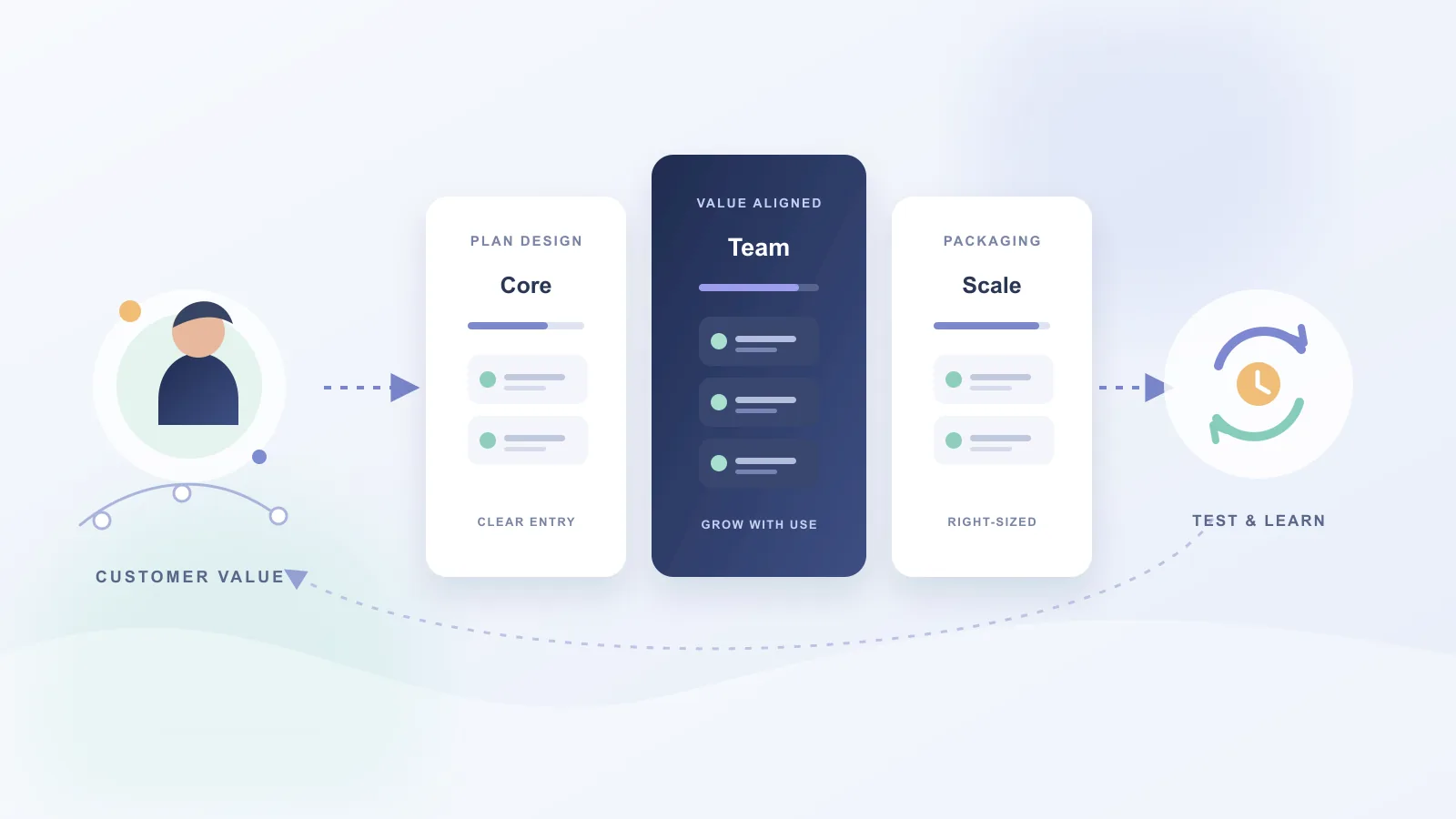
SaaS Pricing Strategies: Choose and Validate a Model
Choose a SaaS pricing model by connecting customer value, buying behavior, product economics, packaging, and evidence from real customer decisions.
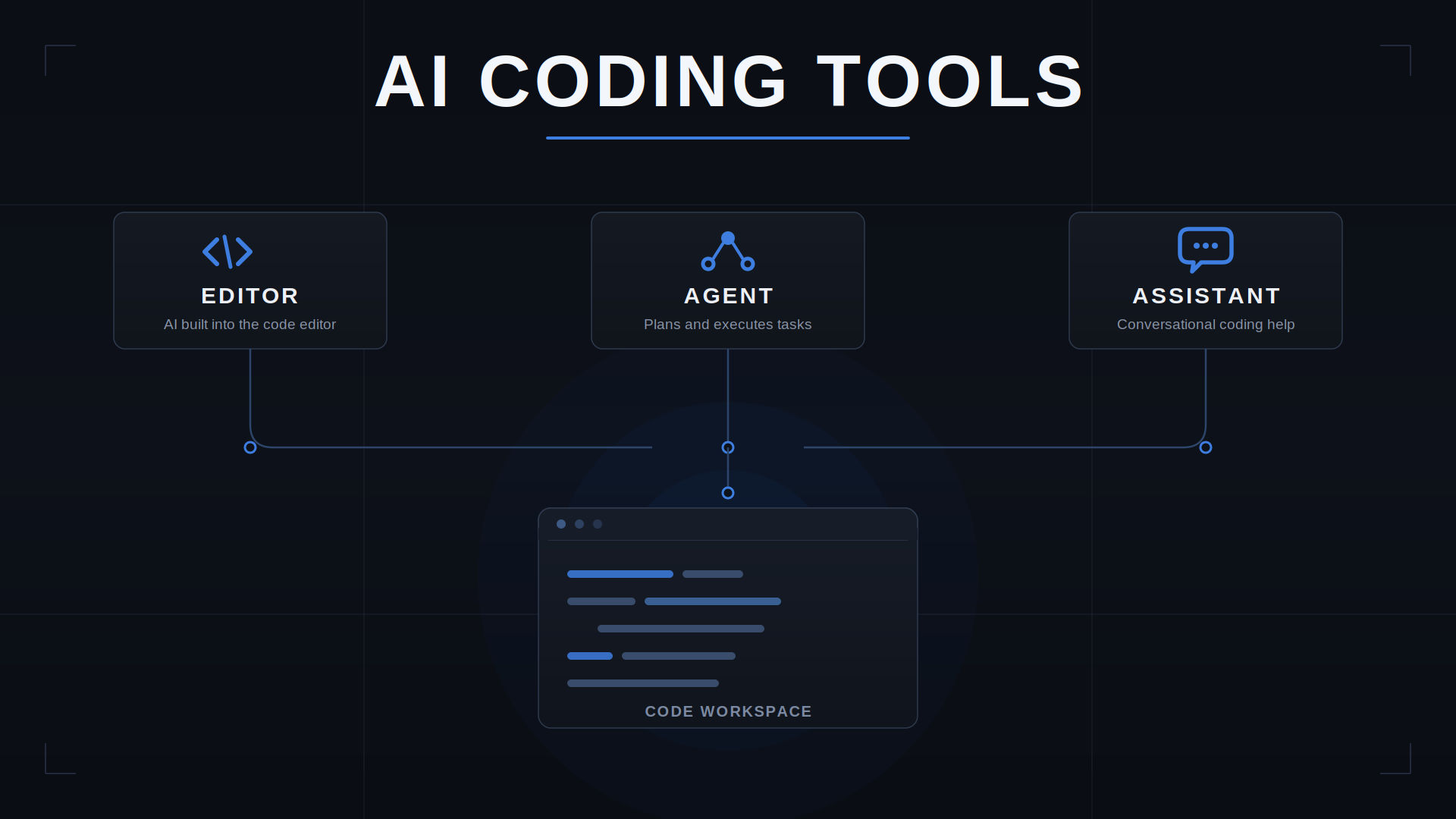
How to Choose an AI Coding Tool for Your Development Workflow
Compare AI coding tools by repository context, code quality, agent autonomy, testing, security, and workflow fit. Learn how to evaluate coding tools using real development tasks.
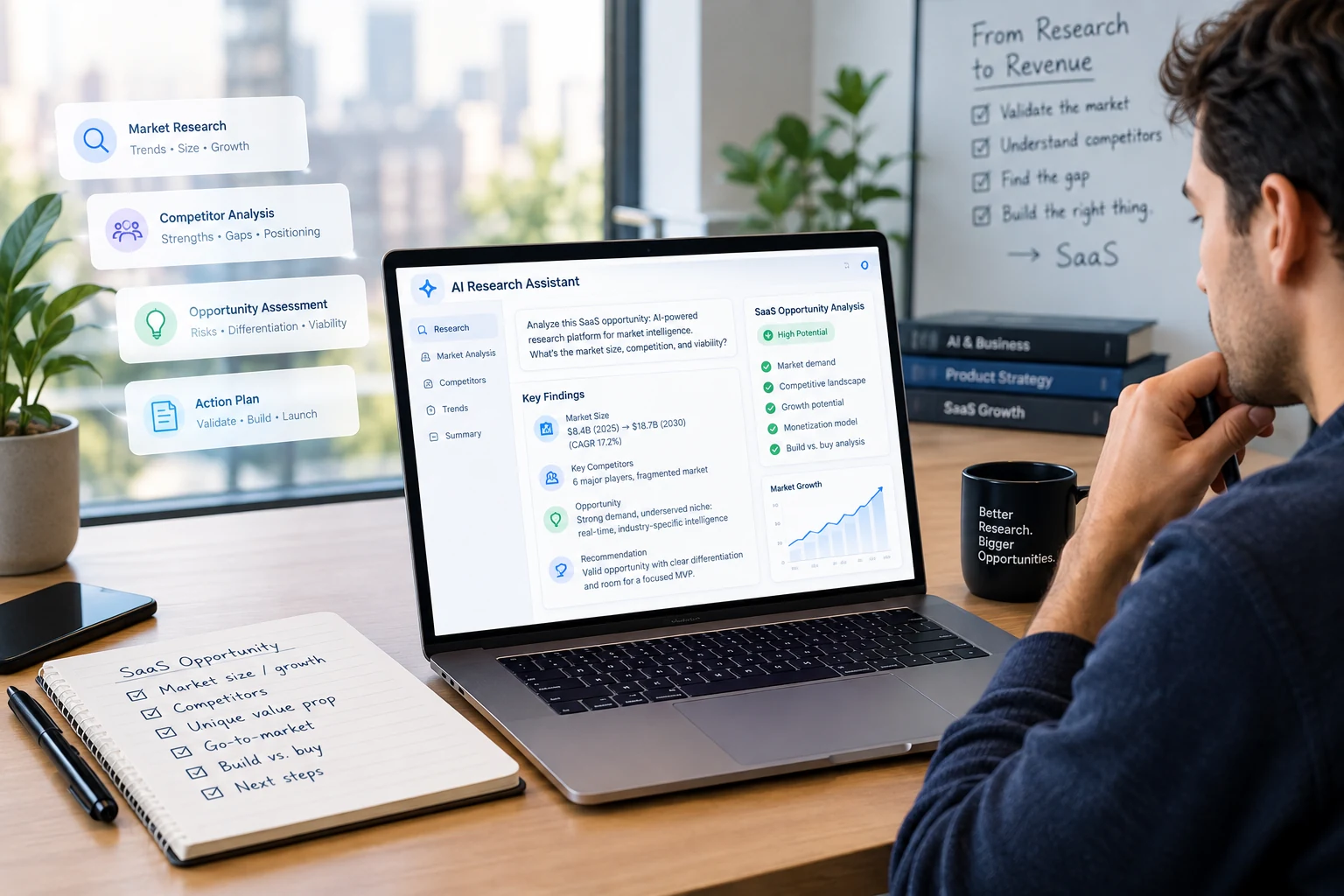
Before You Build: How AI-Powered Research Can Uncover a Promising SaaS Opportunity
Learn how AI-powered research can help you investigate a SaaS idea, understand customers and workflows, study existing solutions, challenge assumptions, and decide what to validate before building.
What Technology Does Your SaaS Actually Need? A Nontechnical Founder’s Guide
SaaS requirements explained for nontechnical founders. Learn what technology your SaaS actually needs, from data and AI to integrations, security, and MVP requirements.