Astro Static Sites: The Developer's Guide to Fast Content Platforms
Build blazing-fast static sites with Astro 5 — content collections, MDX, islands architecture, and deployment.
Why Astro?
Astro pioneered the content-focused web framework category. It optimizes for:
- Zero JS by default
- MDX & Markdown first-class support
- Partial hydration (islands)
- Framework agnostic components
Content Collections
Astro 5 content collections with the glob loader provide type-safe content management:
const articles = defineCollection({
  loader: glob({ pattern: '**/*.{md,mdx}', base: './src/content/articles' }),
  schema: z.object({ title: z.string(), /* ... */ }),
});
Performance
Static generation means:
- Sub-second page loads
- Perfect Lighthouse scores
- Minimal hosting costs
Deployment
Deploy to Cloudflare Pages for global edge delivery with zero cold starts.
When to Choose Astro
✓ Blogs and publications
✓ Documentation sites
✓ Marketing pages
✓ SEO-first architectures
✗ Real-time dashboards
✗ Heavy client-side apps
Frequently Asked Questions
Is Astro good for blogs and publications?
Astro is ideal for content-heavy sites. It ships zero JavaScript by default and supports MDX, content collections, and static generation.
Can Astro replace Next.js?
For content-first sites, yes. For complex SPAs with heavy client interactivity, Next.js may be better suited.
Does Astro support React components?
Yes, via islands architecture. React components hydrate only where needed.
Related Articles
Next.js 15 Complete Guide for Production Apps
Everything you need to know about Next.js 15 — App Router, Server Actions, caching, and deployment best practices.
Cloudflare Pages: Deploy Static Sites to the Edge
Complete guide to deploying Astro, Next.js, and static sites on Cloudflare Pages with global CDN and zero cold starts.
AI Coding Tools in 2025: The Complete Developer's Guide
A comprehensive guide to AI coding assistants — Cursor, Copilot, Windsurf, Cody, and how to choose the right tool.
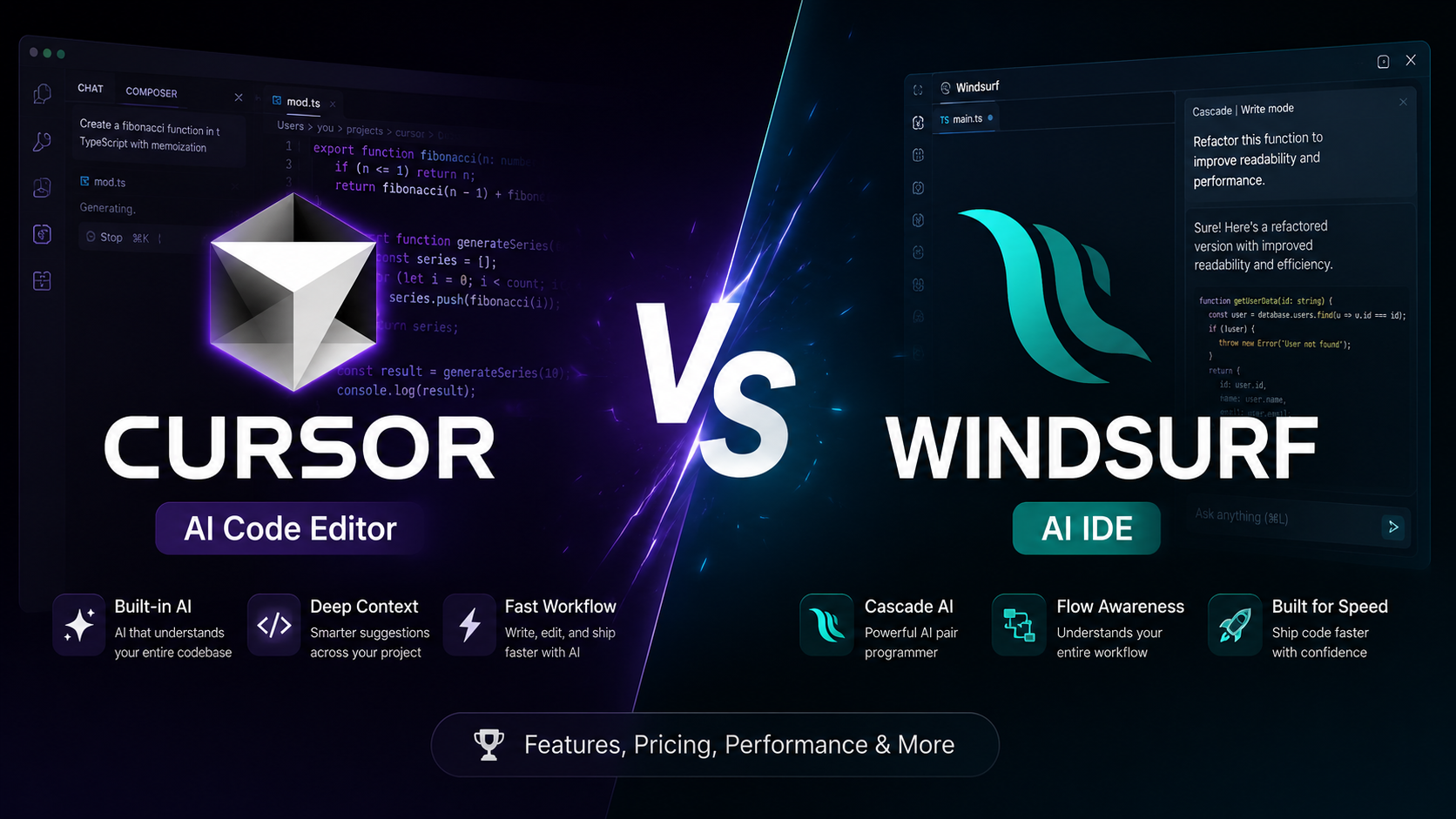
Cursor vs Windsurf: Which AI Code Editor Wins in 2025?
An in-depth comparison of Cursor and Windsurf — features, pricing, performance, and which AI coding assistant fits your workflow.